
Linux server support from Not Without IT keeps your servers updated, secure and documented, whether they run Red Hat Enterprise Linux, Ubuntu, Debian, Amazon Linux or Oracle Linux. Our engineers administer Linux in data centers, in AWS, in Azure and on Oracle Cloud Infrastructure, and we connect over SSH from anywhere in the United States.
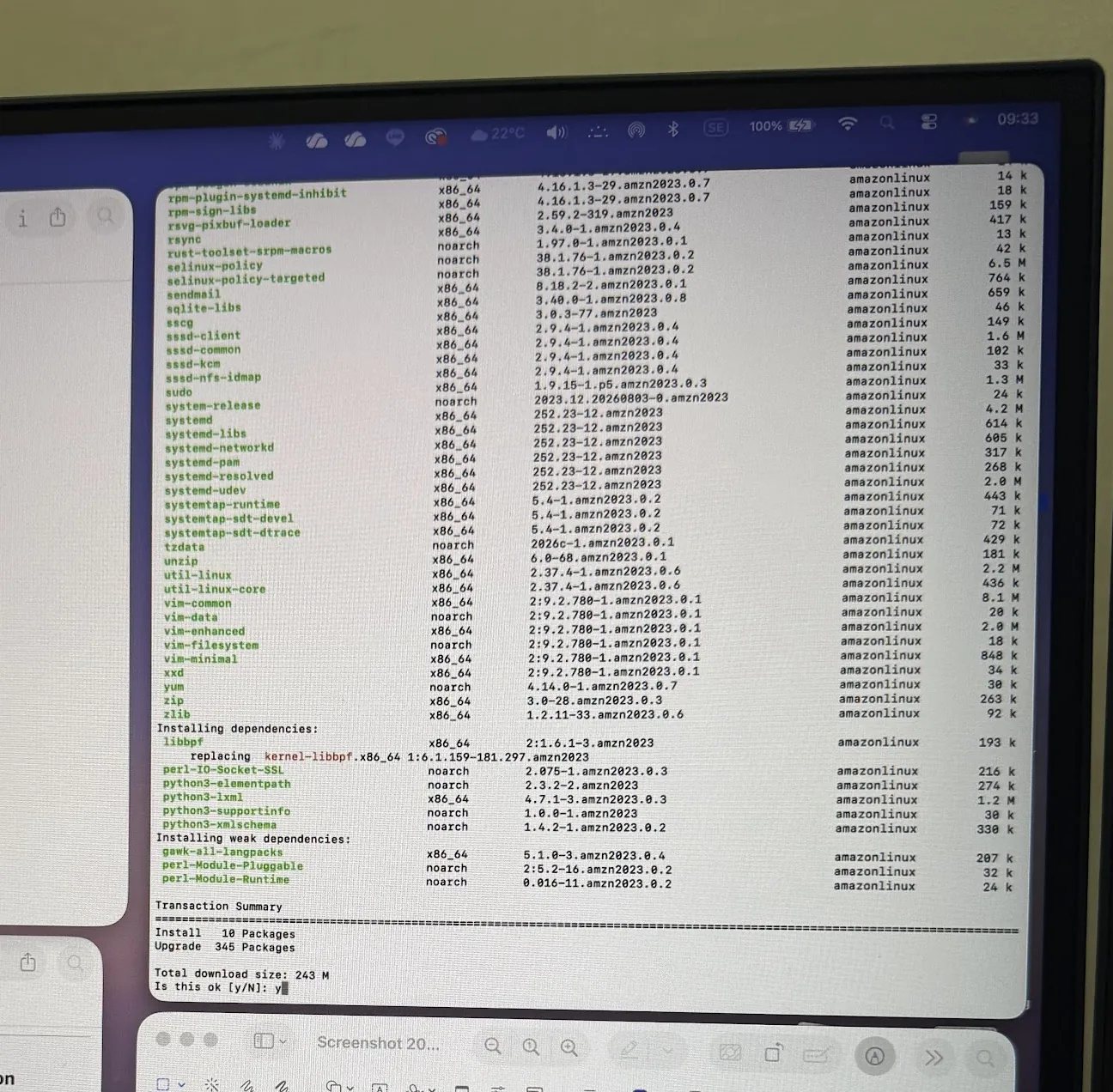
Linux runs the web servers, databases and applications behind most organizations. Yet many of these servers were installed years ago by someone who has since left. As a result, nobody knows which packages are outdated, which accounts still have access or when the operating system reaches end of life. Our Linux server support answers those questions and then keeps the answers current.
What our Linux server support covers
We take responsibility for single servers as well as larger fleets. A typical scope includes:
- Security updates, kernel upgrades and planned reboots with verified service checks.
- Major version upgrades and migrations, for example from CentOS 7 to a supported distribution.
- Hardening: SSH keys, firewall rules, SELinux or AppArmor, and removal of unused services.
- Web servers such as Apache and Nginx, together with PHP, Python and Java runtimes.
- Databases including MariaDB, MySQL and PostgreSQL, with backups and restore tests.
- Monitoring of disk space, memory, certificates and logs, with alerts to an engineer.
In addition, we write automation in Bash and Python, so repeated tasks run the same way every time. For example, a single script can back up a database, verify the archive and report the result.
Supported Linux distributions
We support the distributions that organizations actually run in production. These include Red Hat Enterprise Linux 9 and 10, Oracle Linux, AlmaLinux and Rocky Linux, Ubuntu 24.04 LTS and 26.04 LTS, Debian 12 and 13, SUSE Linux Enterprise and Amazon Linux 2023.
End-of-life dates matter. For instance, CentOS 7 stopped receiving updates in June 2024, and Amazon Linux 2 reached end of support on June 30, 2026. Similarly, Debian 13 receives full support until August 2028, followed by long-term support, according to the Debian release information. We track these dates for every server and plan upgrades long before support ends.
Oracle Linux and Oracle Cloud Infrastructure
Oracle Linux is binary compatible with Red Hat Enterprise Linux, and it runs both on premises and in Oracle Cloud Infrastructure. Therefore, our Linux server support covers OCI compute instances, Oracle Linux updates and the environment around Oracle Database. We also migrate workloads between OCI, AWS and Azure when a customer changes cloud strategy.
How Linux server support works in practice
First, we log in with a personal, key-based account and take an inventory: distribution, version, packages, services, users, cron jobs and open ports. Then we report what we found and agree on priorities with you. Next, we set up monitoring and a monthly maintenance window.
Every change follows the same routine. We take a backup or a snapshot, run a dry run where possible, apply the change and verify the services afterward. Meanwhile, all terminal output goes into a change log. Consequently, you can always see who changed what, when and why.
Why choose Not Without IT for Linux
Our engineers have worked with UNIX and Linux for more than 30 years, from early systems in defense and telecom research to modern cloud instances. Above all, we leave every server better documented than we found it.
Not Without IT is a remote-first company with headquarters in North Tustin, Orange County. We provide remote Linux server support across the United States, and we visit data rooms in Orange County and Irvine when hardware needs attention. For cloud servers, see our AWS consulting and Azure consulting.
Frequently asked questions about Linux server support
Distributions and versions
Which Linux distributions do you support?
We support Red Hat Enterprise Linux, Oracle Linux, AlmaLinux, Rocky Linux, Ubuntu, Debian, SUSE and Amazon Linux.
Our server still runs CentOS 7. What should we do?
CentOS 7 has not received updates since June 2024. Therefore, plan a migration to a supported distribution as soon as possible.
Is Amazon Linux 2 still supported?
No. Its support ended on June 30, 2026, and AWS recommends Amazon Linux 2023.
Should we choose Ubuntu or Red Hat Enterprise Linux?
It depends on your applications, vendor support needs and team skills. We compare both with you before you decide.
Is Oracle Linux the same as Red Hat Enterprise Linux?
Not the same, but it is binary compatible, so most RHEL software runs on it unchanged.
Can you upgrade Ubuntu 24.04 LTS to 26.04 LTS?
Yes. However, we test the upgrade on a copy first, because some packages and configurations change between releases.
How long is Debian 13 supported?
Debian 13 has full support until August 2028 and long-term support until June 2030.
Linux server support for security and updates
How often should Linux servers be updated?
Apply security updates at least monthly, and apply critical fixes within days after a short test.
Do Linux servers need antivirus?
Sometimes, especially file servers that serve Windows clients. More important, however, are updates, hardening and monitoring.
How do you secure SSH access?
We use key-based login, disable password and root login, and limit access by IP address where possible.
What is server hardening?
Hardening removes unused services, tightens permissions and enforces secure settings, so attackers have fewer ways in.
Can you check if our server has been hacked?
Yes. We review logins, processes, cron jobs, modified files and network connections to find signs of intrusion.
Do you use SELinux or turn it off?
We keep SELinux enforcing on RHEL-based systems and write the policies applications need, instead of disabling protection.
Do you need root access?
We use a personal account with sudo rights, so every privileged command is logged under a name.
What happens if an update breaks the server?
Because we take a snapshot or backup first, we can roll back. Then we analyze the cause before trying again.
Applications, databases and cloud
Do you support Apache and Nginx web servers?
Yes. We configure both, including TLS certificates, HTTP/2 and performance tuning.
Can you manage MariaDB and PostgreSQL databases?
Yes. We handle backups, updates, replication and performance tuning for both.
Do you support Linux servers in AWS and Azure?
Yes. We manage Linux on EC2, Azure virtual machines, Google Cloud and Oracle Cloud Infrastructure.
Can you automate tasks with scripts?
Yes. We write Bash and Python scripts with dry-run modes, logging and clear output.
Can you migrate a Linux server to the cloud?
Yes. We build the new server, copy the data, test the applications and switch traffic in a short window.
Do you support containers and Docker?
Yes. We maintain Docker and Podman hosts, and we help move containers to managed services.
Can you help with a kernel panic or a server that does not boot?
Yes. We boot into rescue mode, repair the boot loader or file system, and bring the services back.
Costs and working with us
How much does Linux server support cost?
The price depends on the number of servers and the scope. Therefore, we quote a monthly fee or a project price.
Do you offer emergency Linux support?
Yes. Call (949) 355-1694, and an engineer will help you as soon as possible.
Can you work alongside our developers?
Yes. We provide stable servers and clear permissions, so developers can deploy safely.
Will you document our servers?
Yes. Documentation is part of every agreement, and it stays in a location you control.
Do you visit our data center?
In Orange County and Irvine, yes. Elsewhere in the U.S., we work remotely or travel when necessary.
Can you take over servers from a previous administrator?
Yes. We start with an inventory and a password rotation, so former access no longer works.
Do you support UNIX systems such as AIX and Solaris?
Yes. We also support UNIX systems and migrations from UNIX to Linux.
How do we request Linux server support?
Send the form below or call us, and we will schedule a short call about your servers.